
Translate this page to any language by choosing a language in the box below.
 Anthrax Information
Anthrax had been in the news frequently these days due to the terrorists that attacked the United States in the 2001 - 2016 timeframe. And while these disgusting terrorists have attempted to create fear; in actual fact, very few people have been injured by it. You have more to fear from your neighbor's teenager's driving habits.
But, it is always a good idea to become knowledgeable and prepared.
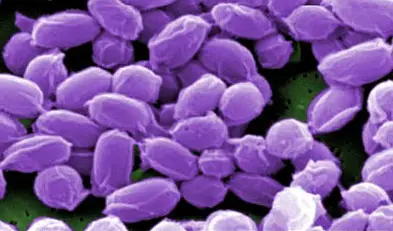
Anthrax is an acute infectious disease caused by the spore-forming bacterium Bacillus anthracis . Anthrax most commonly occurs in farm animals, but it can also infect humans. Symptoms of disease vary, but usually occur within 7 days after exposure. The serious forms of human anthrax spores enter the body through
Bacillus anthracis (B. anthracis), the etiologic agent of anthrax is a Gram positive, spore forming, non-motile bacterium. This is supposed to be one of the most potent BW agents because its spores are extremely resistant to natural conditions and can survive for several decades in the environment. The disease occurs regularly in countries where widespread vaccination of animals is not practiced. Human anthrax is less common and usually spreads to human populations through close occupational proximity to infected livestock by handling infected domestic animals including cattle and goats or their products like skin, meat, hides and bones.
Anthrax contamination was detected in U. S. Senate office buildings and at several other locations across the United States. The EPA has been working closely with the Capitol Hill Police, the U.S. Postal Service, the Centers for Disease Control, the FBI, and other agencies to ensure that existing anthrax contamination is quickly identified and thoroughly cleaned up, and also to prevent future exposures.
While anthrax cleanup is a new challenge, EPA and its partners have assembled an effective toolbox for tackling it. In a very short time, we've significantly advanced the science and technology of detecting and cleaning up anthrax.
Workers who have been exposed to anthrax spores in an anthrax remediation worksite may be given antibiotics to prevent the anthrax spores from developing their deadly toxins.
Note: Due to the extreme hazards potentially associated with exposure to anthrax, it is absolutely essential for responders to work closely with EPA and other federal agencies with expertise in sampling, decontamination, and protection of workers.
Personal Protective Equipment
Prophylaxis
Procedures for Collecting Samples
Anthrax Technical Assistance Document The purpose of this document is to help protect public health and safety by providing the most current information available throughout the federal government, and sharing national experience to date in responding to intentional releases of B. anthracis in urban environments. This document will be updated on a periodic basis to reflect new knowledge based on further experience and the results of relevant research. But this information is evolving rapidly, and it is difficult to keep a written document as current as it needs to be. Therefore, new information related to detection and decontamination of B. anthracis will be published at www.nrt.org , as soon as it is available.
Options for Decontamination
(Note: These options are authorized for use only under specific conditions tailored to the characteristics of each site.)
For Employers/Building Managers:
EPA's Technology Innovation Office is leading an effort to collect and disseminate information about technologies that detect and kill anthrax and other biological agents. "Technology for Biological Threats" is a clearinghouse for information about these technologies and their vendors, and links to other resources pertaining to the detection and decontamination of biological agents. We are also operating a vendor helpline at (703) 390-0701 and an email address at [email protected] to field inquiries from vendors of detection, decontamination, and measurement technologies.
Under the Federal Insecticide, Fungicide, and Rodenticide Act, all products that claim to be a sanitizer, disinfectant, sterilant, or sporicde need a registration number or approval for emergency use from the Antimicrobials Division of EPA's Office of Pesticide Programs. Vendors of decontamination technologies who wish to get their technology registered or approved for emergency use should contact Jeff Kempter in EPA's Office of Pesticide Programs, Antimicrobials Division, at (703) 305-5448, or [email protected] . For a complete list of crisis exemptions issued by EPA for pesticide products used for decontamination of anthrax see ( http://208.184.25.73/crisis.htm ).
Anthrax decontamination is a rapidly evolving field, with new methods and technologies continually being developed and tested. Several different antimicrobial pesticides and devices are being currently used by qualified experts under carefully controlled conditions in anthrax cleanups being done across the country.
EPA's Technology Innovation Office is leading an effort to collect and disseminate information about technologies that detect and kill anthrax and other biological agents. Technology for Biological Threats is a clearinghouse for information about these technologies and their vendors, and links to other resources pertaining to the detection and decontamination of biological agents. We are also operating a vendor helpline at (703) 390-0701 and an email address at [email protected] to field inquiries from vendors of detection, decontamination, and measurement technologies.
Under the Federal Insecticide, Fungicide, and Rodenticide Act, all products that claim to be a sanitizer, disinfectant, sterilant, or sporicde need a registration number or approval for emergency use from the Antimicrobials Division of EPA's Office of Pesticide Programs. Vendors of decontamination technologies who wish to get their technology registered or approved for emergency use should contact Jeff Kempter in EPA's Office of Pesticide Programs, Antimicrobials Division, at (703) 305-5448, or [email protected] . For a complete list of crisis exemptions issued by EPA for pesticide products used for decontamination of anthrax see ( http://www.EPATechBiT.org/crisis.htm ).
Other Counter-terrorism Activities
Like many other federal agencies, EPA is working closely with the Office of Homeland Security to develop a national strategy to strengthen protections against terrorist threats or attacks in the United States. But EPA has also been actively involved in federal counter-terrorism planning and response efforts for the past several years. See EPA's Chemical Emergency Preparedness Office (CEPPO) for more information. Our primary responsibilities have been to help state and local response personnel plan for emergencies, to provide counter-terrorism response training, and to provide technical expertise and other resources in the event of a terrorist incident.
The methods for preventing and controlling anthrax exposure and infection vary by workplace. Employers in animal handling occupations who may anticipate exposure may find the following useful.
T here is a larger body of response planning information. The Department of Health and Human Services (DHHS), CDC, the American Hospital Association (AHA), Department of Defense, and OSHA have several resources about how hospitals can plan and prepare for terrorist events:
Local emergency responders also have an important role in recognizing and responding to terrorist events. The National Domestic Preparedness Office (NDPO), Federal Emergency Management Administration (FEMA), CDC, and OSHA provide several resources that address readiness and response by emergency responders:
In the event that anthrax is released, controls such as personal protective equipment (e.g., respirators) and decontamination will be needed to limit exposure and prevent secondary infection. You can find additional technical information in the following resources:
For additional assistance about specific aspects of worker health and safety associated with potential anthrax exposure, contact the following hotlines or helplines.
Call 911 (police) then
contact your local FBI Field Office
Centers for Disease Control and Prevention Vaccine Information
National Immunization Hotline (English): 1-800-232-2522
National Immunization Hotline (Spanish): 1-800-232-0233
U.S. Department of Defense
Anthrax Vaccine Immunization Program Information Line: (877) 438-8222 (877-GET-VAC).
General and emergency contact numbers for most State and territorial public health laboratories. For general worker health and safety information:Department of Justice
State & Local Domestic Preparedness Helpline: 800-368-6498, 9-6 EST (non-emergency technical assistance)
Centers for Disease Control
Emergency Preparedness & Response Branch Hotline for State Health Officials: 770-488-7100 (24-hour line)
Health and Human Services, Office of Emergency Preparedness
National Disaster Medical System: (301) 443-1167 or 800-USA-NDMS
OSHA: 1-800-321-OSHA (6742)
Anthrax Case Investigation Epi-Info Database
Recommended Specimens for Microbiology and Pathology for Diagnosis of AnthraxAntimicrobial Treatment for Systemic Anthrax: Analysis of Cases from 1945 to 2014 Identified Through a Systematic Literature Review (2015) [PDF - 10 pages]external icon
Antitoxin Treatment of Inhalation Anthrax: A Systematic Review (2015)external icon
Prevention and Treatment of Anthrax in Adults (2014): Results of CDC Expert Panels
EID Journal (2014): Special Considerations for Pregnant and Postpartum Women
Pediatric Anthrax Management (2014): Executive Summaryexternal icon | Clinical Reportexternal icon
CDC Guidance (2013): Anthrax Vaccine Adsorbed (AVA) Post-Exposure Prioritization pdf icon[PDF - 19 pages]
National Notifiable Diseases Surveillance System: Case Definitions (2018)
Guideline for Isolation Precautions (2007): Preventing Transmission of Infectious Agents in Healthcare Settings pdf icon[PDF - 219 pages]
Ways to save money AND help the environment:
Eat healthier AND save money: Instant Pot Duo Crisp 11-in-1 Air Fryer and Electric Pressure Cooker Combo with Multicooker Lids that Fries, Steams, Slow Cooks, Sautés, Dehydrates
Save water AND money with this showerhead adapter, it lets the water flow until the water is hot, then shuts off water flow until you restart it, ShowerStart TSV Hot Water Standby Adapter
Protect your health with these:
Mattress Dust mite-Bedbug protector, 100% Waterproof, Hypoallergenic, Zippered
Handheld Allergen Vacuum Cleaner with UV Sanitizing and Heating for Allergies and Pet, Kills Mite, Virus, Molds, True HEPA with Powerful Suction removes Hair, Dander, Pollen, Dust,
Immune Support Supplement with Quercetin, Vitamin C, Zinc, Vitamin D3
GermGuardian Air Purifier with UV-C Light and HEPA 13 Filter, Removes 99.97% of Pollutants
5 Stage Air Purifier, Features Ultraviolet Light (UVC), H13 True Hepa, Carbon, PCO, Smart Wifi, Auto Mode, Quiet, Removes 99.97% of Particles, Smoke, Mold, Pet Dander, Dust, Odors
Interesting Reads:
THE PREPPER'S CANNING & PRESERVING BIBLE: [13 in 1] Your Path to Food Self-Sufficiency. Canning, Dehydrating, Fermenting, Pickling & More, Plus The Food Preservation Calendar for a Sustainable Pantry
The Backyard Homestead: Produce all the food you need on just a quarter acre! Paperback
The Citizens' Guide to Geologic Hazards: A Guide to Understanding Geologic Hazards Including Asbestos, Radon, Swelling Soils, Earthquakes, Volcanoes
The Uninhabitable Earth: Life After Warming
Book: The Sixth Extinction: An Unnatural History Paperback
